|
Foreword / Contents
Introduction
1 The Ultimate Aim of this Study: Establishing Absolute Dates
1.1 Iron Age IIB Chronology in the Light of Selected Markers
1.2 Iron Age IIA–C: Tightening the Loose Ends
2 The Material Studied in this Volume
3 Methodological Considerations
3.1 The Scope of the Present Study
3.2 Some More Practical Considerations
3.2.1 The Dates of the ‘Hebrew Kings’
3.2.2 The Bible Translation Used
4 Consequences That are beyond the Scope of the Present Volume
1 Neo-Assyrian Related Sillographic Evidence and the terminus ante quem of Iron Age IIA in Israel and Judah
1.1 Anepigraphic Bullae from the ‘Rock-Cut Pool Fill’ and the Iron Age IIA–B Transition in Jerusalem
1.1.1 Introduction
1.1.2 Conclusions: Chronological Parameters
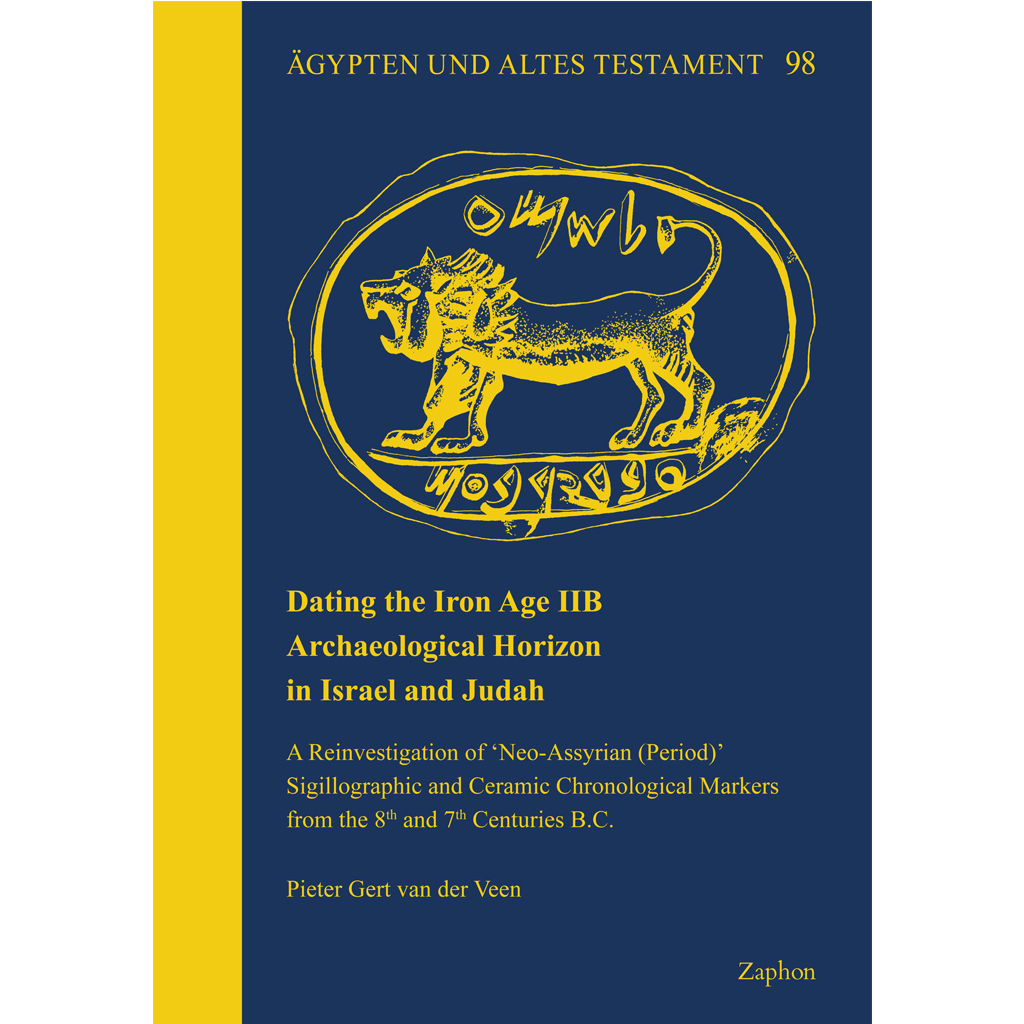
1.2 The Shema Seal and the End of Iron Age IIA Megiddo
1.2.1 The Shema Seal
1.2.2 The Stratigraphic Context
Excursus 1: Does Amos’ Earthquake Provide a Plausible Archaeological Context?
Excursus 2: The Duration of Iron Age IIA and Its terminus post quem in Israel
2 ‘Assyrian-Style’ Pottery and Its Implications for Israel and Judah during Iron Age IIB (early)
2.1 General Introduction
2.2 The Late ‘Assyrian-Style’ Pottery-Conundrum: General Considerations
2.2.1 Cis- and Transjordanian Imitations and Their Late Assyrian Prototypes
2.2.2 ‘Assyrian-Style’ Imitations: Predating Assyrian Prototypes?
2.2.3 Are Lower Dates Indeed Constrained by Historical Correlations?
2.2.4 ‘Assyrian-Style’ Pottery and Its Impact on Chronology
2.2.5 Genuine Assyrian-Style Pottery from Assyria
2.2.6 A terminus post quem within Assyria Proper
2.2.7 Imitated ‘Assyrian-Style’ and Associated ‘Edomite-Style’ Pottery: Mainly from Cisjordan
2.2.8 ‘Assyrian-Style’ Pottery from Iron Age IIB Strata in Israel/Judah
2.2.9 The Arad-Beersheba-Valley Sites: post 701 B.C. = post-Lachish III?
2.2.10 ‘Assyrian-Style’ Pottery Even at Lachish Level III?
2.2.11 Anachronistic ‘Bathtub Coffins’
2.2.12 Conclusions
Excursus 1: The Earliest Late Iron Age II ‘Edomite Pottery’ and Its Assumed Judaean Chronological Linchpin: One step out with Evidence?
Addendum 1: Problems with 14C Dates from Edom
Excursus 2: Some Enigmatic ‘Assyrian-Style’ Objects from Kfar Veradim and Tel Dan
3 Iron Age IIB in Judah: The ‘Lachish Level-III’ Horizon and the lmlk-Stamp Impressions
3.1 General Introduction
3.2 The Chronology of the lmlk Storage Jars: An Overview
3.2.1 701 B.C. or Later? A Summary of Some Recent Discussions
3.3 A Fresh Look at the Royal Stamp Imagery
3.3.1 The Use of Religious and Political Symbols during the Pax Assyriaca in the Southern Levant
3.3.2 The Stamped Jar Handle Emblems and Their Possible Connotations
3.4 Conclusions
Excursus 1: The Use of the Royal Jars: A Tentative Proposal
Excursus 2: Official Names-Seal Impressions on Type 484 Storage Jars: Lack of Positive Markers, Some Speculations
4 Conclusions and Prospects for Future Study
4.1 Conclusions: the termini post and ante quem of Iron Age IIB
4.2 Iron Age IIB and the Reigns of Hezekiah and Manasseh: Prospects for Future Research
4.2.1 The Destruction of Lachish Level III: When Did It Happen?
4.2.2 Manasseh’s Building Projects: The ‘Second Wall’ and the Siloam-Tunnel
4.2.3 The Topography and Prosperity of Manasseh’s Kingdom
Abbreviations
Bibliography
|